Feeling foggy, unfocused, or not quite yourself?
We can help — with EXOMIND, a non-invasive brain stimulation therapy in Boca Raton.
EXOMIND supports mood, focus, motivation, and cognitive resilience — while helping decrease emotional distress. At COGNITIVA, it's part of a physician-led brain health plan for adults experiencing depression, stress, brain fog, poor focus, low motivation, or early memory concerns.
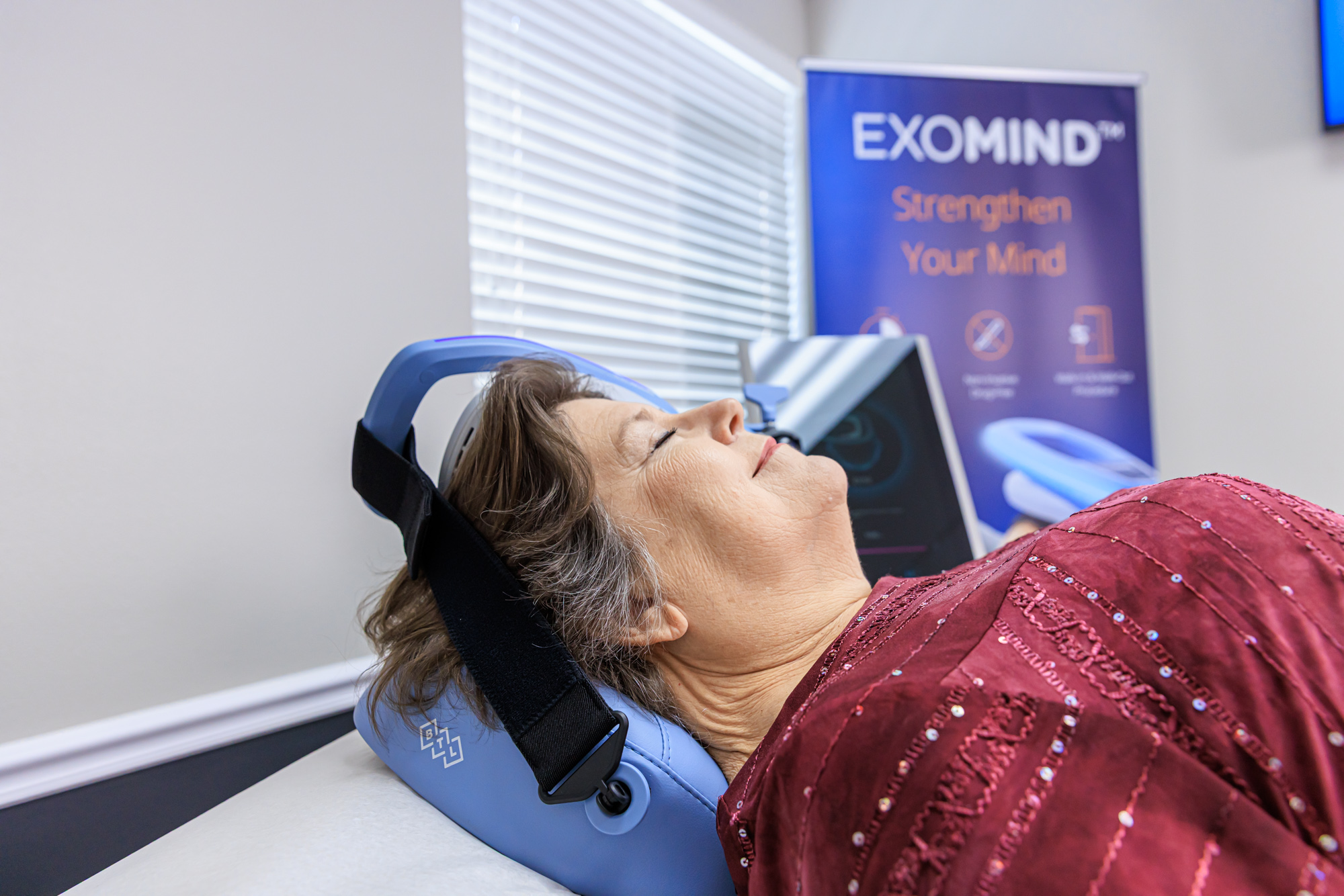
A comfortable, in-office experience in Boca Raton.
Every EXOMIND session takes place in our Boca Raton office under physician supervision. Patients remain awake and comfortably seated while the device delivers targeted magnetic stimulation to specific brain regions.
- Non-invasive & drug-free — no anesthesia required
- Each session fits into a single office visit
- Return to normal activities immediately after
Enter your email and we'll reach out to schedule your Boca Raton consultation.
Your information is kept confidential.
Strengthen the brain. Support mood. Protect cognitive function.
At COGNITIVA Brain Health, we believe brain health is more than memory testing. It is about improving the systems that help the brain function at its best: mood, sleep, attention, motivation, stress regulation, and cognitive performance.
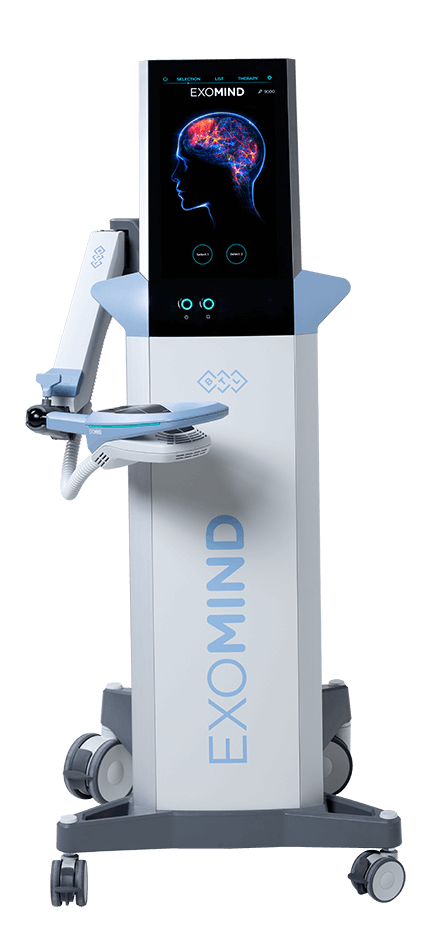
EXOMIND is an advanced form of transcranial magnetic stimulation (TMS) designed to non-invasively stimulate targeted areas of the brain involved in mood regulation, focus, emotional control, and executive function.
Unlike medications, EXOMIND does not circulate through the whole body. It is a non-invasive, drug-free treatment performed in the office while the patient is awake and seated comfortably.
Emerging research on TMS suggests that brain stimulation has potential cognitive benefits in certain populations, including people with cognitive impairment, brain fog, and early cognitive symptoms.
Why EXOMIND fits the COGNITIVA brain health model.
At COGNITIVA, we look at memory and cognition through a whole-brain lens. Many patients who worry about their memory are also dealing with:
EXOMIND is an integral part of the COGNITIVA brain health plan.
Support across the systems that drive daily brain performance.
Because factors like mood, focus, motivation, and mental clarity work together, improvements in one area can meaningfully affect the others.
Mood Support
Depression is one of the most common and most underrecognized contributors to memory complaints. Patients may describe forgetfulness, poor concentration, low motivation, slower thinking, or difficulty completing tasks.
By targeting brain networks involved in mood regulation, EXOMIND helps improve depressive symptoms in appropriate patients.
Brain Fog & Mental Clarity
Many patients describe "brain fog" even when standard memory testing does not show dementia. This may be related to depression, anxiety, sleep problems, chronic inflammation, medications, menopause, metabolic dysfunction, long-term stress, or other medical issues.
Because EXOMIND targets networks involved in attention, cognitive control, and emotional regulation, patients experience improvement in clarity, focus, and mental energy.
Focus, Motivation & Executive Function
The prefrontal cortex plays an important role in planning, attention, impulse control, motivation, decision-making, and follow-through. These are the same abilities many patients and families notice declining before "memory" becomes the main issue.
EXOMIND helps support prefrontal brain networks that are important for these functions, especially when mood and motivation are part of the problem.
Memory & Cognitive Support
Research on repetitive TMS (rTMS) has shown promising cognitive findings in people with mild cognitive impairment, Alzheimer's disease, and other cognitive disorders. A 2024 review reported favorable evidence for improved cognition with TMS across groups with cognitive impairment and described TMS as generally safe.
At COGNITIVA, we are especially interested in EXOMIND as a potential tool to support early cognitive symptoms, brain fog, depression-related cognitive problems, and patients seeking a proactive brain health strategy.
Who may — and may not — be a good candidate.
A consultation is required to determine whether EXOMIND is appropriate and safe for you.
EXOMIND may be appropriate for adults experiencing:
- Depression or low mood
- Anxiety with poor focus or mental fatigue
- Brain fog
- Reduced motivation
- Difficulty concentrating
- Memory concerns that may be worsened by mood, sleep, or stress
- Mild cognitive symptoms where a broader brain health plan is needed
- Interest in non-medication brain health interventions
EXOMIND may not be appropriate for patients with:
- A history of seizures
- Metal implants in or near the head
- Certain implanted medical devices
- Unstable neurological conditions
- Certain types of brain injury
- Severe uncontrolled medical or psychiatric symptoms
A simple, physician-led path from consult to session.
Before Treatment
You will complete a consultation to review your symptoms, medical history, medications, cognitive concerns, and brain health goals with Dr. Cichowicz.
During Treatment
You will sit comfortably while the EXOMIND device delivers magnetic stimulation to targeted brain regions. The treatment is non-invasive and does not require anesthesia. Patients can return to normal activities after the session.
After Treatment
Some patients notice changes in mood, motivation, clarity, or focus after just one treatment. Others may require a full treatment series before meaningful changes are seen.
Brain health, done the way it should be.
Physician-Led Brain Health
COGNITIVA is led by a physician specializing in adult and geriatric psychiatry, with a focus on memory, cognitive decline, dementia prevention, mood disorders, and advanced brain health interventions.
Objective Cognitive Monitoring
We believe brain health should be measured. When appropriate, we use cognitive testing to establish a baseline and follow changes over time.
Integrated Care Plan
EXOMIND may be combined with lifestyle, medical, nutritional, sleep, metabolic, and cognitive interventions — creating a whole-person brain health strategy.
Focus on Early Action
The earlier we identify cognitive risk, the more opportunities we have to intervene. Waiting is not a plan.
EXOMIND is not a standalone dementia treatment.
At COGNITIVA, we are optimistic about the future of brain stimulation, but we are also careful and honest.
EXOMIND is not presented as a cure for dementia, and it should not replace a full medical evaluation for memory loss.
That is why COGNITIVA uses EXOMIND as part of a broader physician-led brain health approach — not as a one-size-fits-all solution.
Common questions about EXOMIND at COGNITIVA.
Is EXOMIND the same as regular TMS?
Does EXOMIND treat dementia?
Can EXOMIND improve memory?
Is EXOMIND a medication?
Will I need cognitive testing?
Is this only for depression?
Schedule your COGNITIVA brain health consultation.
Let us help determine whether EXOMIND fits into your personalized brain health plan. A consultation is required to determine whether the treatment is appropriate and safe for you.
Schedule My Consultation →Medical Disclaimer
EXOMIND/TMS is not appropriate for every patient. Results vary. EXOMIND should not be considered a cure for dementia, Alzheimer's disease, mild cognitive impairment, depression, anxiety, or any other medical condition.
A clinical consultation is required to determine whether this treatment is appropriate. Any memory concern should be evaluated by a qualified clinician to rule out reversible, medical, neurological, psychiatric, sleep-related, or medication-related causes.